

Reopening of Kunsthalle Würth
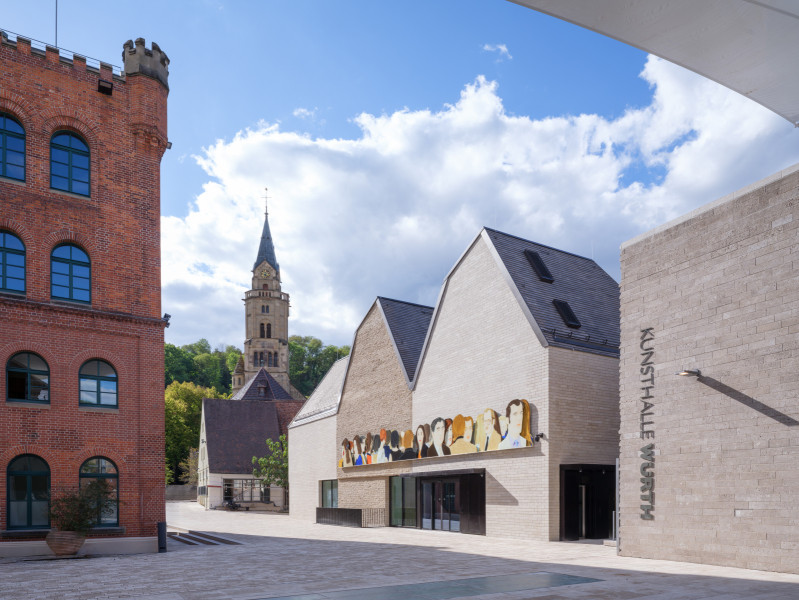
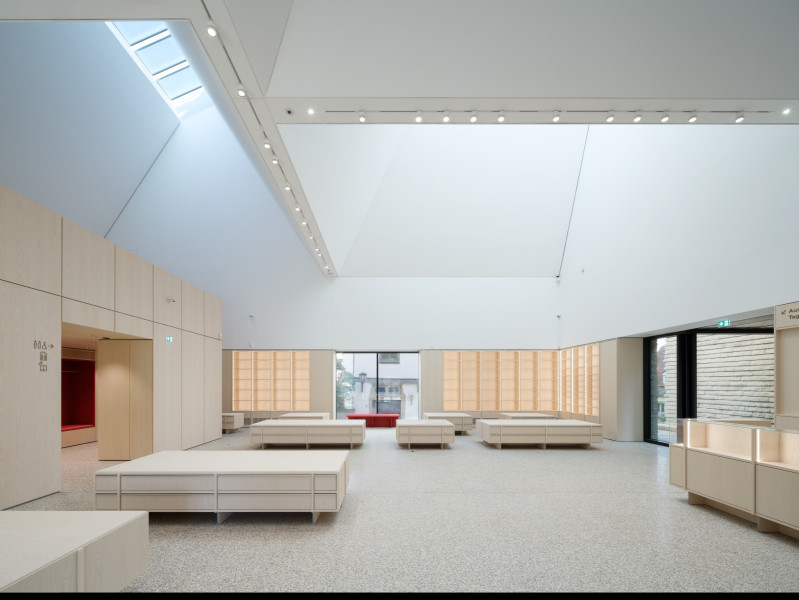
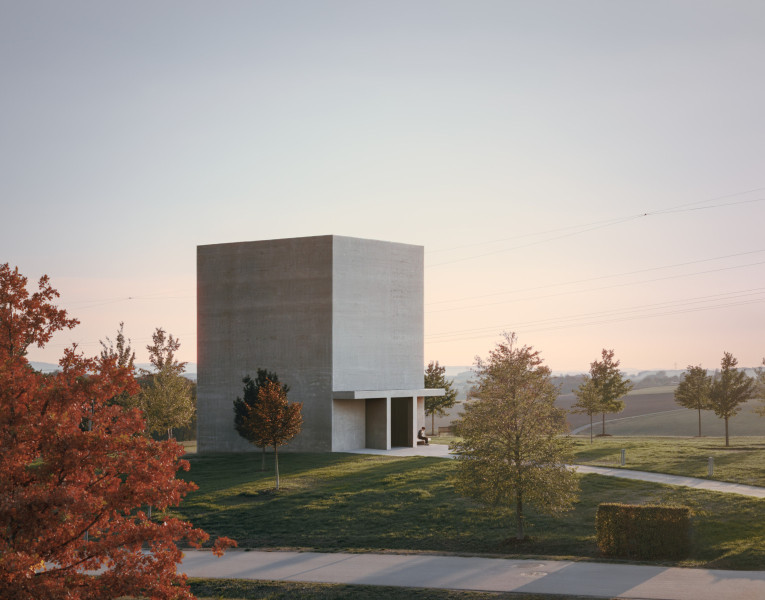
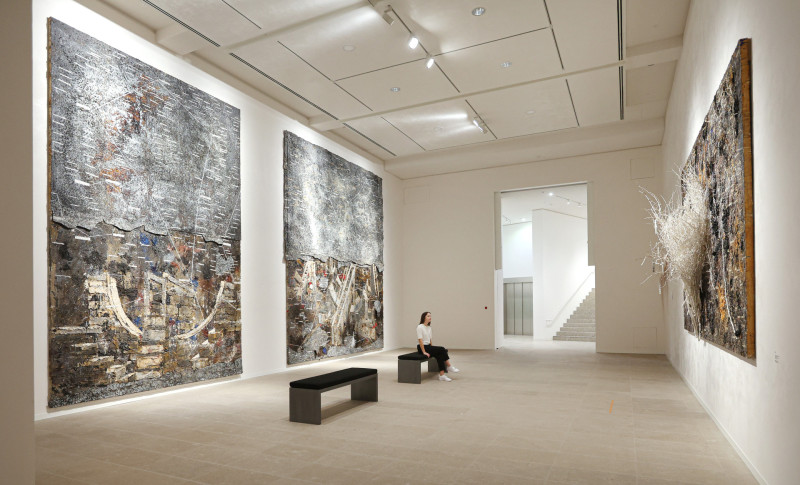
The monographic exhibition “Anselm Kiefer – All That Is the Case” marks the reopening of Kunsthalle Würth in Schwäbisch Hall, Germany. An additional 600 square meters of space now allows visitors to follow a circular route through the museum. On the same day, the Anselm Kiefer Pavilion opens in Künzelsau, Germany, featuring the largest work by the artist in the Würth Collection.
After three years of construction and renovation work, Kunsthalle Würth in Schwäbisch Hall, Germany, is reopening its doors. The grand opening ceremony, attended by Germany’s Federal President, Frank-Walter Steinmeier, and State Premier of Baden-Württemberg, Cem Özdemir, will take place tomorrow, Tuesday, 13 October 2026, for invited guests. To mark the Kunsthalle Würth’s 25th anniversary, the museum will present the major monographic exhibition “Anselm Kiefer – All That Is the Case” from 16 October 2026. The exhibition brings together more than 70 works by Anselm Kiefer from the Würth Collection and 21 works on loans from the artist’s studio. The Anselm Kiefer Pavilion will open to the public at Museum Würth 2 in Künzelsau on 13 October 2026.
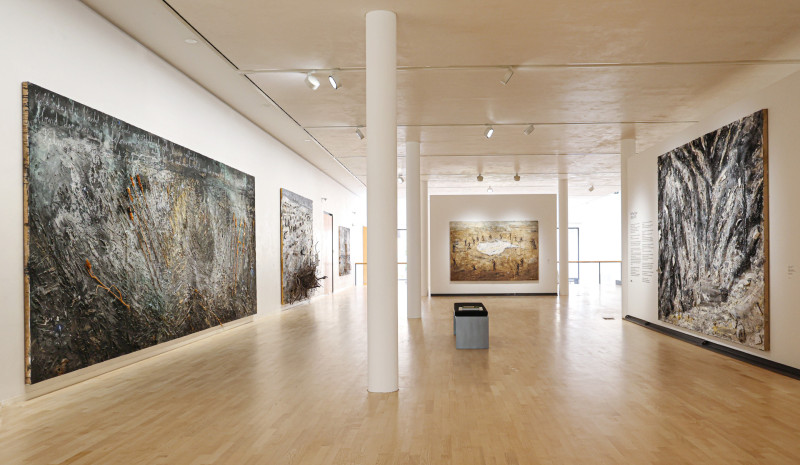
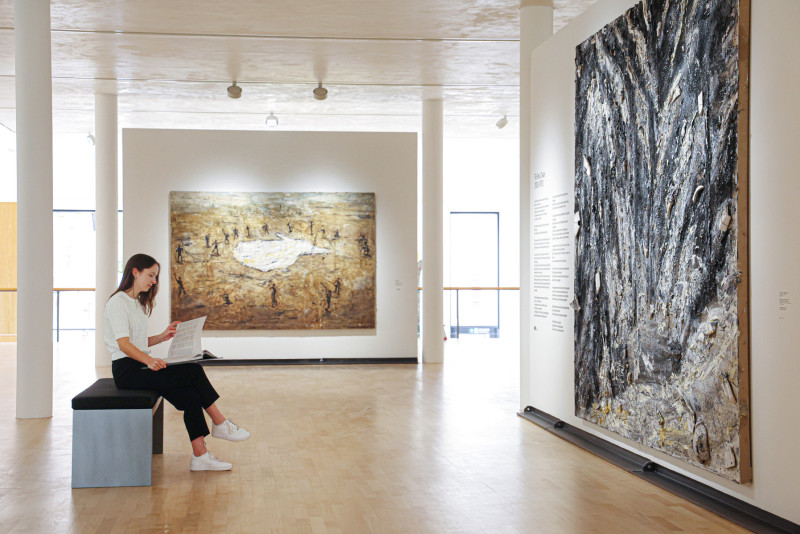
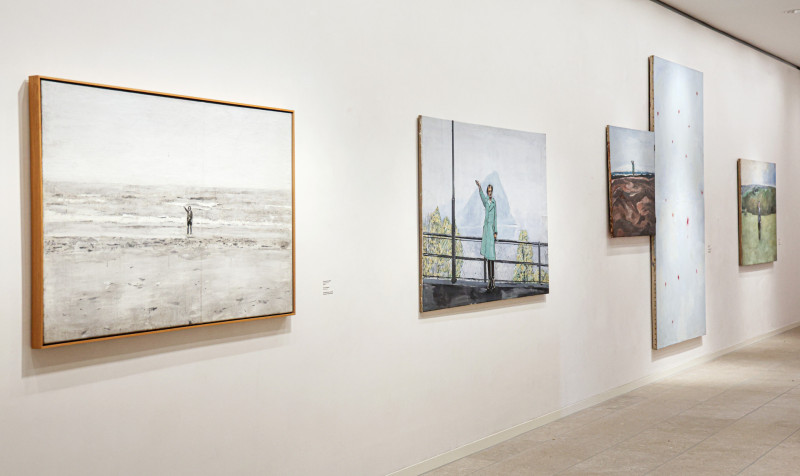
The exhibition “Anselm Kiefer – All That Is the Case”
In 1996, entrepreneur and collector Prof. Dr. h. c. mult. Reinhold Würth, Honorary Chairman of the Supervisory Board of the Würth Group, acquired The Angel (1976–1978), the first work by Anselm Kiefer to enter his collection. Over the decades, a close relationship developed between the collector and the artist, whose work brings together history, myth, religion, literature, and philosophy in compelling and fascinating ways. Today, Anselm Kiefer, who was born in Donaueschingen, Germany, in 1945, is one of the defining artists represented in the Würth Collection. The collection holds predominantly large-scale works spanning every period of his career.
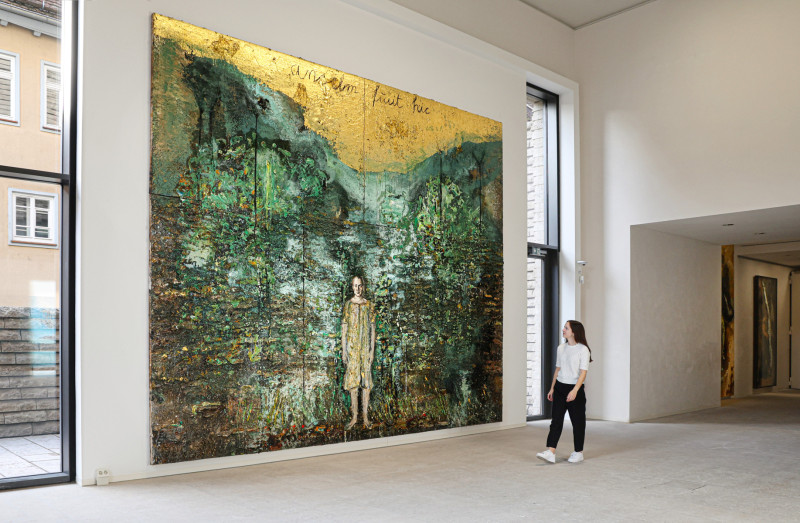
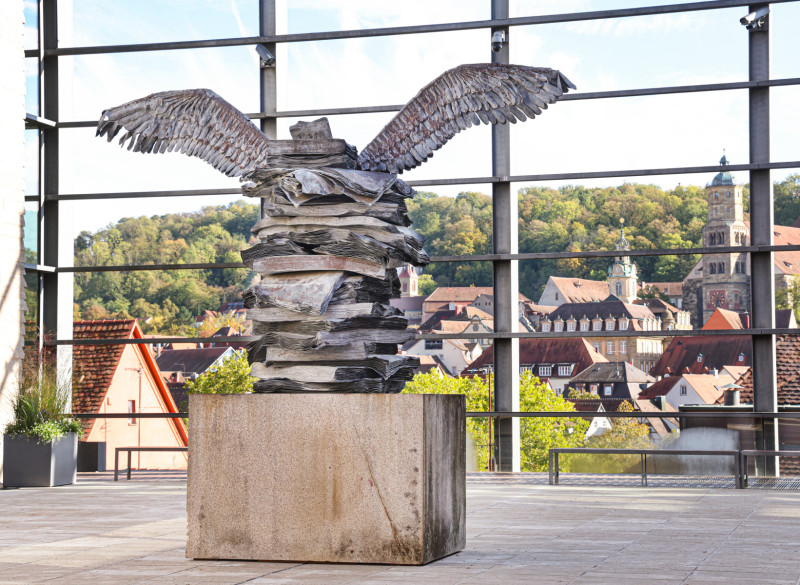
Nevertheless, the exhibition “Anselm Kiefer – All That Is the Case” is not intended as a retrospective. Instead, it focuses on central, recurring themes in Kiefer’s work and the diversity of his materials. The exhibition ranges from early works from the 1960s and 1970s, including Occupations and Heroic Symbols, through philosophical explorations of the microcosm and macrocosm to visual worlds rooted in Kabbalah, Romanticism, literature, and a critique of political ideologies. Also on display are Kiefer’s installations made from steel shelving units or stacks of lead books, such as Laokoon from 2008. These works bring into sharp focus the connections between knowledge, memory, and history, as well as the interplay between intellectual reflection and material transformation. The large-format painting Anselm fuit hic (2017–2024) is one of the most recent acquisitions in the Würth Collection. As a tribute to the Rhine and the Black Forest, the landscapes of his childhood, it combines personal memory with a striking depiction of these landscapes.
The works from the Würth Collection are complemented by loans from the artist, including works on paper and photographs. The selection of photographs assembled by Anselm Kiefer highlights a medium that is essential to his artistic process and that he calls his “holy assistant.”
More space for art: extension of Kunsthalle Würth
The extension designed by Henning Larsen Architects adds 600 square meters of exhibition space to Kunsthalle Würth, bringing the total to 3,200 square meters and allowing visitors to follow a circular route through the museum. Kunsthalle Würth now also houses spaces for art education, media, and administration, as well as a café.
Built in 2001 on the site of a former brewery in the Katharinenvorstadt district, Kunsthalle Würth brings Henning Larsen’s contemporary architecture into sensitive dialogue with its historic surroundings. The extension continues this symbiosis between old and new. Its articulated roofscape echoes the late-medieval buildings nearby while reinterpreting their forms in a contemporary style. This creates an ensemble comprising the original Kunsthalle Würth building, the extension, and the landmark buildings of the historic town center. The facade further reinforces this relationship. Like the original building, the extension is clad in shell limestone from Crailsheim in Germany—a regional material that is also characteristic of the historic townscape.
Visitors enter through a new, light-filled reception area with a museum shop. The café in the original building adjoins the reception area. From there, the exhibition route continues through the basement levels, where new underground galleries connect the original building with the extension. The first floor houses the new spaces for art education. Adolf Würth Hall will continue to host events. The new ensemble creates a larger museum forecourt, providing a new public space.
A pavilion for a work: Black Flakes in Künzelsau
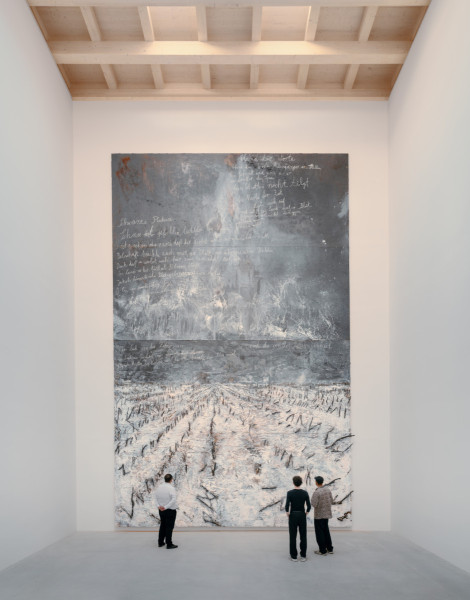
The Anselm Kiefer Pavilion in Künzelsau is dedicated to the encounter with a single work. Designed by Sir David Chipperfield, the building provides a permanent home for Anselm Kiefer’s monumental 2007 work Black Flakes, which is being shown to the public there for the first time. Measuring around 11 meters in height and 7 meters in width, it is the largest work by the artist in the Würth Collection. Chipperfield also designed the Carmen Würth Forum, which opened in 2017, and Museum Würth 2, which opened in 2020.
The 140-square-meter pavilion sits on a slight rise at the southwestern edge of the site surrounding the Carmen Würth Forum and Museum Würth 2 in Künzelsau and forms part of the Würth Sculpture Garden. The austere form of the building directly follows the interior volume specified by Kiefer. The proportions, door opening, and colors of the walls are also based on the artist’s specifications. A restrained portico marks the threshold between the landscape and the art space. Inside, the massive timber beams of the roof structure remain visible. Between them, muted daylight enters through dome-shaped skylights, varying with the time of day and season. Clay plaster defines the elemental character of the space. The architecture thus becomes a resonance chamber for art that exceeds conventional dimensions.
The work is dedicated to the poem Black Flakes by Paul Celan, one of the most important German-language poets of the 20th century. Celan’s poetry is one of the recurring literary reference points in Kiefer’s work.
Prof. Dr. h. c. mult. Reinhold Würth on Anselm Kiefer: “I was struck by the incredible power of his work and, indeed, by his strong ties to the region. In many of his paintings, one senses a certain down-to-earth quality and his reflection on our history. His connection to the landscape, nature, the Rhine, and mythology. That is where our interests align, which is why I have always enjoyed seeing his paintings featured in exhibitions at our museums. As I recall, works by Anselm Kiefer were on display as early as the opening exhibition at Kunsthalle Würth in 2001.“
Maria Würth, Executive Vice President of the Würth Group for Arts and Culture: “Anselm Kiefer was born in Donaueschingen in 1945, the year that marked the end of World War II. Questions of memory, history, and responsibility have therefore accompanied his work from the very beginning. Yet he does not leave us alone with his complex narratives. Rather, his works leave us traces to follow—like Ariadne’s thread leading through multilayered pictorial worlds. Some things remain enigmatic, some seem dark. Yet that is precisely where the appeal lies, as does the invitation to look more closely.”
Werner Frosch, Partner and Managing Director at Henning Larsen Architects in Munich: “When Kunsthalle Würth, designed by Henning Larsen, opened in Schwäbisch Hall in 2001, it created a special place where art, architecture, and the public could meet. The collection built up by Reinhold Würth with great passion, together with his extraordinary and sustained commitment to art and culture, has made Kunsthalle Würth known far beyond the region and given it a firm place in the international cultural landscape. The extension now completed sees itself as a consistent continuation of this story—a respectful development of the existing building and its architectural approach. The result is an ensemble that secures the future of this exceptional institution and enables even more people to experience art of the highest caliber.”
David Chipperfield describes the collaboration and the Anselm Kiefer Pavilion as follows: “It has been a great privilege and honour to have been involved over many years in the realisation of Reinhold Würth’s vision for the cultural campus in Künzelsau. A project that not only demonstrates his enduring commitment to the arts, but also his conviction that art should form part of everyday life, and even the working environment. The Anselm Kiefer Pavilion continues our shared belief that architecture can contribute meaningfully to public cultural life. Developed together with Anselm Kiefer, the pavilion is a space conceived entirely around the needs of a single work of art, where architecture serves principally to frame and intensify the experience of the work.”
The Würth Collection
The Würth Collection is one of the most active private art collections in Europe and can be experienced free of charge at 14 of its own European locations. For more than fifty years, entrepreneur and art collector Prof. Dr. h. c. mult. Reinhold Würth has passionately collected art from Germany and around the world, assembling a collection that spans around 500 years of art history—from the late Middle Ages to the present day. It includes South German Renaissance portraits as well as objects of courtly splendor. It also contains extensive bodies of work by Anselm Kiefer, Max Ernst, Christo and Jeanne-Claude, and David Hockney. Today, the Würth Collection comprises around 21,000 works.