

Old Masters in the Würth Collection: Hubert Gerhard’s Madonna and Child arrives at Johanniterkirche
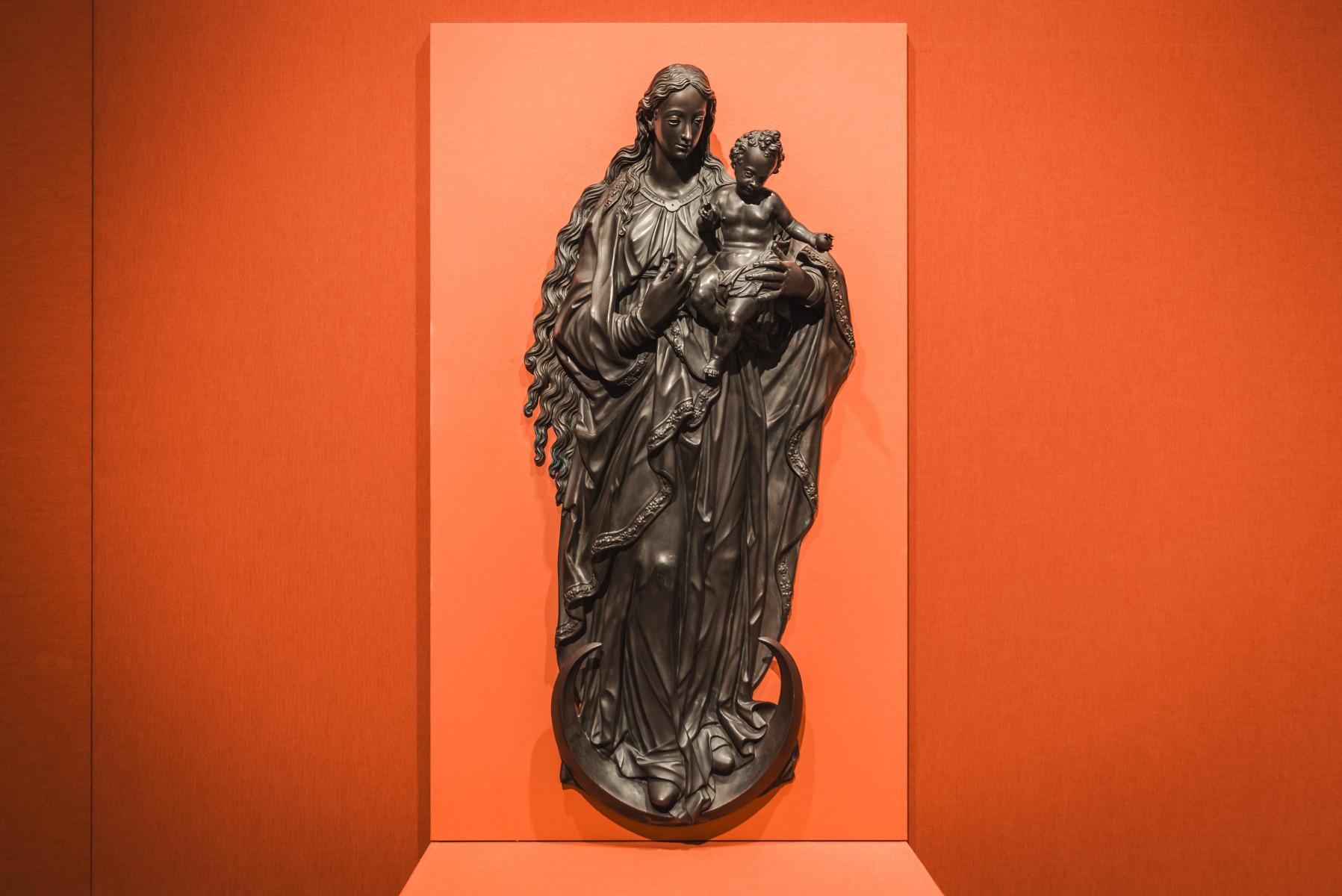
Hubert Gerhard’s Madonna and Child—a masterpiece of early Baroque bronze sculpture dating to around 1600—is now on permanent display thanks to its acquisition for the Würth Collection.
Hubert Gerhard (* c. 1540/50 in ’s‑Hertogenbosch; † c. 1620 in Munich), the Dutch creator of exceptional early Baroque bronzes, is regarded as one of the most important representatives and vanguard of the Italian style north of the Alps. His training based on Florentine models, particularly in the workshop of Giovanni da Bologna, is evident in the elegance of his manneristically elongated figures. Gerhard’s spirited interpretations set new standards for sculpture in southern Germany. He worked for the Fugger family in Augsburg, served as court sculptor in Munich and later in Innsbruck—so sought after, in fact, that even Emperor Rudolf II tried in vain to bring the outstanding sculptor to his court in Prague.
Thanks to the successful efforts of Philipp Herzog von Württemberg, Gerhard’s Madonna on the crescent moon—one of the most important depictions of the Virgin Mary in bronze sculpture from around 1600—has now found its way into Johanniterkirche in Schwäbisch Hall. It stands remarkably close to its original place of creation. Representing the Madonna and Child with a scepter, this work was originally made for the palace chapel of Emperor Rudolf II’s brother, Archduke Maximilian III of Austria, at his residence in Bad Mergentheim, where he served as Grand Master of the Teutonic Order.
Mary stands with both feet upon the crescent moon, identifying her—even without a crown—as sovereign over all celestial bodies. While the Christ Child, whose curls echo those of his mother, holds the globe in his left hand and raises his right in a two‑fingered gesture of blessing, the crescent moon—symbol of inconstancy and evil—is pressed down beneath Mary’s feet.
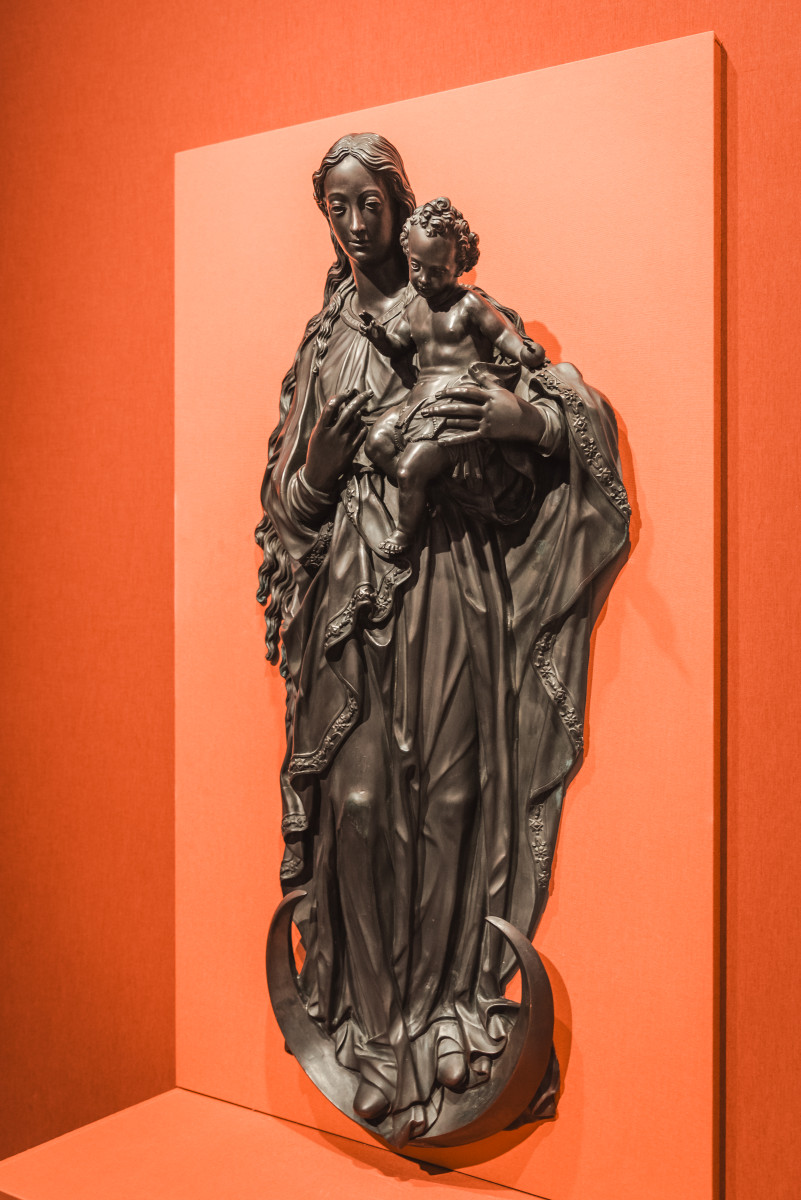
Johanniterkirche, Schwäbisch Hall: “Old Masters in the Würth Collection” with the Madonna of Jakob Meyer zum Hasen by Hans Holbein the Younger and the Falkenstein Altar by the Master of Meßkirch. Opening hours: daily 11 am to 5 pm. Admission: free